


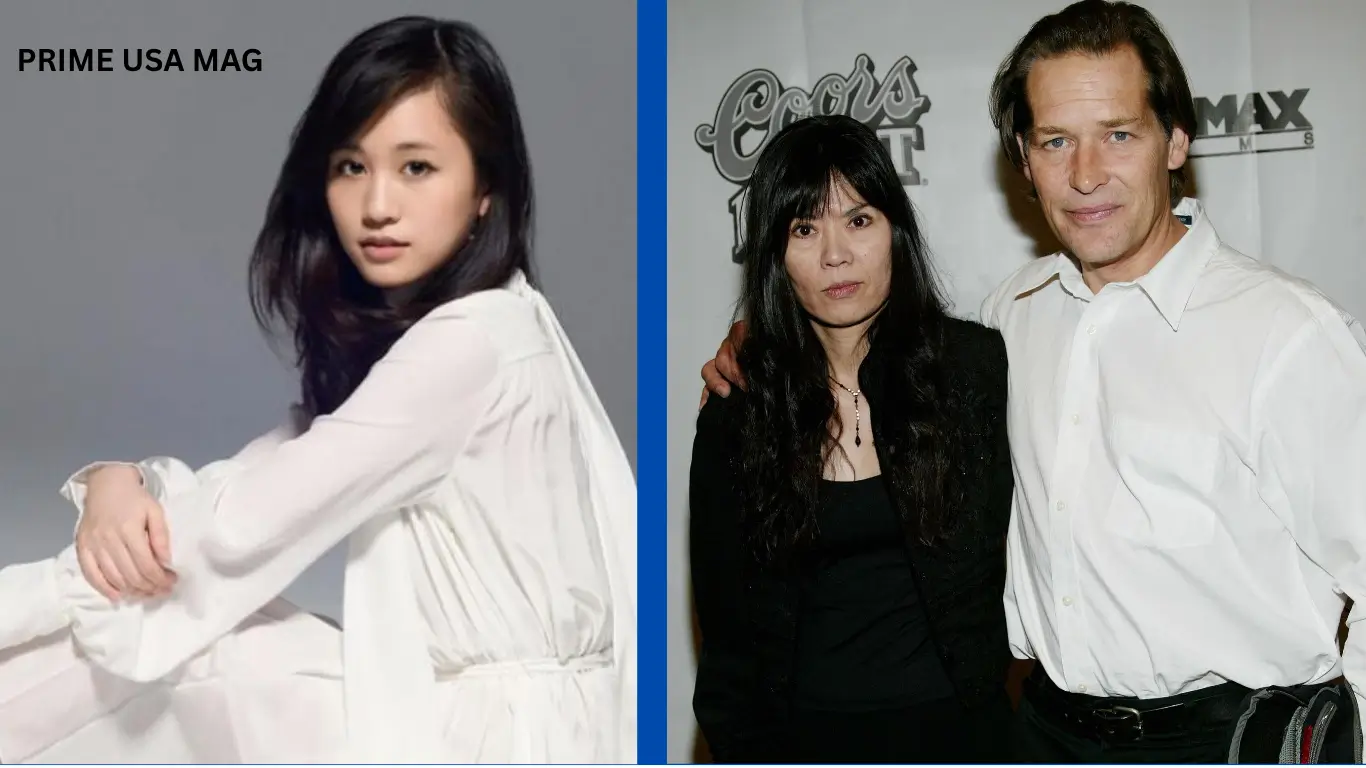
Atsuko Remar is one of the most quietly compelling figures connected to Hollywood — not because she sought the spotlight, but precisely because she never did. In an industry built on visibility, self-promotion, and the relentless performance of public life, Atsuko chose something far rarer: a private, grounded existence defined by family, cultural values, and a four-decade marriage to one of American cinema’s most recognizable character actors, James Remar. Her story is not one of red carpets or awards ceremonies. It is something more enduring than that — a story of quiet strength, personal integrity, and what it truly means to build a life of substance in a world that constantly rewards surface.
This article takes a comprehensive, thoughtful look at who Atsuko Remar is, where she comes from, what her life has looked like, and why her story continues to captivate people who encounter it. Whether you came across her name while researching James Remar or stumbled upon her through curiosity about celebrity spouses who deliberately avoid the public eye, what you will find here is more than a biographical summary. It is an exploration of identity, cultural heritage, and the kind of personal strength that never makes headlines precisely because it does not need to.
Early Life and Cultural Roots: Where Atsuko Remar’s Story Begins
Atsuko Remar was born in Japan around 1954, given the birth name Atsuko Itsuki. The name Atsuko carries meaningful weight in Japanese culture — it is often interpreted to mean “child of profound emotions” or “warm child,” a name that, looking back on the kind of person she is understood to be, feels fitting in the deepest sense.
Growing up in Japan in the postwar era meant coming of age in a society that was simultaneously rebuilding its identity and holding tightly to its ancient values. Japanese culture of that period placed enormous emphasis on concepts like gaman — the capacity to endure difficulty with patience and dignity — and uchi-soto, the clear distinction between the private inner world and the public outer world. These were not abstract philosophical concepts but lived, daily principles that shaped how a generation understood themselves, their families, and their responsibilities to both.
For Atsuko, these values appear to have taken deep root. Everything that is observable about her adult life — the deliberate privacy, the steadiness within a marriage to someone whose career kept him perpetually in public view, the refusal to trade on her husband’s fame for personal attention — reflects a worldview that was likely shaped in those formative years in Japan. She did not arrive in the United States as a blank slate. She arrived as someone who already knew, with quiet certainty, what she valued and how she intended to live.
The details of her education remain private, as do the specifics of her childhood family environment. This is consistent with how she has handled virtually all personal information throughout her adult life. What can be said with confidence is that she is understood to be well-educated and that her move to the United States as a young adult represented a significant life transition — leaving a culture she knew deeply for one that was, in almost every way, its opposite in terms of noise, pace, and the public performance of identity.
The Meeting and Marriage: A Love Story Built on Substance
Atsuko met James Remar in the early 1980s, during a period when James was actively building his acting career. He had already made a significant impression with his role as Ajax in The Warriors (1979), a performance that gave him a lasting cult following, and he was beginning to establish himself as a reliable, powerful character actor in Hollywood. It was a moment when his professional life had momentum, and it was into this moment that Atsuko Itsuki arrived.
What drew two people from such different cultural backgrounds together is not something either of them has discussed in detail publicly — and that discretion itself is revealing. In a media landscape where celebrity couples routinely narrate their love stories for magazines and talk shows, the Remars have never offered their relationship up for public consumption. What is known is that they married in 1984, choosing a small, private ceremony attended only by close family and friends. No press coverage, no Hollywood fanfare, no media invitations. The simplicity of that beginning set the tone for everything that followed.
Over four decades of marriage is a remarkable achievement by any standard, but in Hollywood — where the average celebrity marriage is measured in months rather than years — it is genuinely extraordinary. The Remars have built something that most of the industry’s most famous couples have failed to sustain: a long-term partnership that appears to have been nurtured through mutual respect, complementary values, and a shared commitment to protecting their private life from public intrusion.
What is particularly striking about their relationship is the way it seems to have functioned as a counterbalance. James Remar’s career, spanning roles in 48 Hrs., Dexter, Sex and the City, Django Unchained, and dozens of other projects, kept him consistently in the public eye for decades. That kind of sustained visibility can destabilize a person’s sense of self and erode the boundaries between public persona and private identity. Having a partner who was firmly, intentionally anchored in private life appears to have provided exactly the kind of grounding that a long career in entertainment so often erodes.
Atsuko Remar as a Mother: The Foundation She Built
Atsuko and James Remar have two children together — a son, Jason Remar, and a daughter, Aiden Remar. Both children grew up outside the media spotlight, a direct result of their mother’s insistence on protecting family privacy. This was not a passive choice. In an era of social media where celebrity children are routinely photographed, profiled, and treated as extensions of their parents’ public brand, keeping children genuinely private requires active, sustained effort.
Atsuko’s approach to motherhood appears to reflect the same values that have defined her throughout her life: quiet dedication, cultural rootedness, and a deep belief that children deserve the space to develop identities that belong entirely to themselves. The fact that neither of her children have become subjects of media attention — despite having a well-known father — suggests that this protective instinct was effective and that it was honored by the family as a whole.
This dimension of Atsuko Remar’s life is perhaps the one most worth examining carefully, because it challenges a narrative that the entertainment industry often projects: that children of famous people inevitably become public figures themselves. The Remar children demonstrate that this is a choice, not an inevitability, and that the choice is most powerfully made not by the famous parent but by the quieter one who insists on drawing the boundary.
Professional Identity: An Entrepreneur Who Kept Her Work Private
What Atsuko Remar does professionally has never been publicly detailed with precision, but she is consistently described across available information as an entrepreneur and businesswoman. The fact that she maintained a professional identity independent of her husband’s career is significant. Many spouses of Hollywood actors define their professional lives in relation to their partner’s — as managers, producers, or advocates for their husband’s or wife’s career. Atsuko appears to have taken a different path, building her own professional engagement while staying completely out of the public conversation about it.
This independence speaks to something important about her character. She did not need the visibility of James Remar’s career to define her own sense of purpose or professional worth. Whatever her entrepreneurial activities have involved, they appear to have been pursued on her own terms, for her own reasons, and outside the framework of celebrity adjacency that so often shapes the choices of people in her position.
What Atsuko Remar’s Story Teaches Us: A Broader Reflection
There is a tendency in contemporary media to treat privacy as a form of absence — as though a person who does not share their life publicly is somehow less present, less interesting, or less worthy of attention than those who do. Atsuko Remar’s story challenges this assumption directly and powerfully.
Consider what she has actually built over her lifetime:
- A marriage of more than forty years to a prominent Hollywood actor, sustained entirely outside the mechanisms of public performance and media management
- A family environment that protected two children from the particular psychological pressures of celebrity culture
- A professional identity built on her own terms, independent of her husband’s fame
- A personal reputation, consistent across all available accounts, for warmth, intelligence, and composed dignity
- A life that reflects her cultural values with integrity, even while living in one of the world’s most culturally aggressive environments
This is not a life of absence. It is a life of extraordinary accumulation — of relationships, values, and personal integrity — simply carried out without the audience that our culture so often demands.
The case of Atsuko Remar also invites a reflection on cultural identity and migration. Moving from Japan to the United States, as she did as a young adult, means navigating a profound cultural transition. The values that Japanese culture instilled in her — the emphasis on dignity, the preference for substance over show, the deep respect for privacy and family — did not dissolve when she crossed that border. They remained, and they appear to have become her most enduring personal assets. In a culture that can be extraordinarily homogenizing, she maintained her distinctiveness not through performance but through quiet, consistent living.
James Remar: Understanding the Public Half of a Private Partnership
To understand Atsuko Remar fully, it helps to understand the world she has navigated alongside her husband. James Remar is a character actor of the highest order — someone whose face and voice have been fixtures in American film and television for more than four decades, even if his name is sometimes less immediately recognized than his performances.
His career has included landmark roles across multiple genres and generations: the menacing Ajax in Walter Hill’s The Warriors, the equally menacing Albert Ganz in 48 Hrs., recurring appearances as Harry Morgan in Dexter, a role in Sex and the City, and a memorable appearance in Quentin Tarantino’s Django Unchained. His career is one defined by range, durability, and the ability to command attention in supporting roles without overshadowing the productions around him.
Living alongside that career — the auditions, the rejections, the periods of intense public visibility, the demands of production schedules, the psychological weight of inhabiting dark characters for extended periods — requires a particular kind of partnership. Atsuko has provided that partnership for over four decades. Whatever the private dynamics of their relationship, the observable outcome — a lasting marriage, a stable family, two children who grew up grounded and out of the spotlight — suggests that the partnership has worked in the deepest possible sense.
Frequently Asked Questions About Atsuko Remar
Who is Atsuko Remar? Atsuko Remar is a Japanese-born entrepreneur and businesswoman, best known as the wife of American actor James Remar. She was born around 1954 with the birth name Atsuko Itsuki and has built a life defined by privacy, family values, and personal integrity. Despite being connected to a prominent Hollywood figure, she has consistently chosen to remain out of the public eye.
When did Atsuko Remar marry James Remar? Atsuko and James Remar married in 1984, following a period of courtship in the early 1980s. Their wedding was a private, intimate ceremony with no media coverage. As of 2026, they have been married for over four decades — one of Hollywood’s longest-lasting marriages.
Does Atsuko Remar have children? Yes. Atsuko and James Remar have two children together: a son named Jason Remar and a daughter named Aiden Remar. Both children were raised away from media attention, consistent with their mother’s strong emphasis on family privacy.
What is Atsuko Remar’s nationality and background? Atsuko Remar is of Japanese origin, born in Japan and raised with traditional Japanese cultural values. She later relocated to the United States as a young adult, eventually becoming a Japanese-American. Her Japanese heritage has visibly shaped her approach to privacy, family, and personal conduct throughout her life.
What does Atsuko Remar do professionally? Atsuko Remar is understood to be an entrepreneur and businesswoman, though the specific details of her professional activities have never been publicly disclosed. She has maintained a professional identity independent of her husband’s acting career, consistent with her overall approach of building a life outside the public domain.
Why does Atsuko Remar avoid the media? Atsuko Remar’s avoidance of media attention appears to be a deeply held personal value rather than a response to any particular event or circumstance. Her upbringing in Japanese culture, with its strong emphasis on privacy, family, and the separation of private and public life, likely informs this choice. She has never given interviews or maintained a public social media presence.
What is Atsuko Remar’s net worth? Atsuko Remar’s personal net worth has not been publicly disclosed. As a private entrepreneur, she has never shared financial information publicly. As a household, she and James Remar are understood to be financially comfortable, given James Remar’s long and successful career in Hollywood, but specific figures are not confirmed.
How old is Atsuko Remar in 2026? Based on the widely reported birth year of 1954, Atsuko Remar would be approximately 71 to 72 years old in 2026. Her exact birth date has never been publicly confirmed, consistent with her overall approach to personal privacy.
Final Thoughts: The Quiet Power of a Life Fully Lived
What makes Atsuko Remar’s story worth telling — and worth reading — is not the proximity to fame that her marriage provides. It is the fact that she has, by all observable accounts, lived an extraordinarily intentional life. Every choice she has made, from the private wedding in 1984 to the deliberate raising of her children outside the celebrity machine to the maintenance of her own professional identity on her own terms, reflects a coherent, deeply held sense of who she is and how she wants to live.
In 2026, as the culture around celebrity grows ever louder and the pressure to perform one’s life publicly grows ever more intense, Atsuko Remar’s quiet example feels almost radical. She is proof that significance does not require an audience. That a life can be full, rich, and genuinely admirable without a single tweet, interview, or red carpet appearance to document it.
The people who search for her name are often looking for something specific — a biography, a photograph, a revealing detail. What they find, if they look carefully, is something more valuable: the outline of a woman who knew exactly what she valued, protected it fiercely, and built something lasting from it. That is a story worth knowing, even if — especially if — most of it remains beautifully, deliberately untold.
For More Visits: PrimeUsaMag
Also Read: Lily Gladstone: 7 Brilliant Facts You Must Know in 2026













Leave a comment