




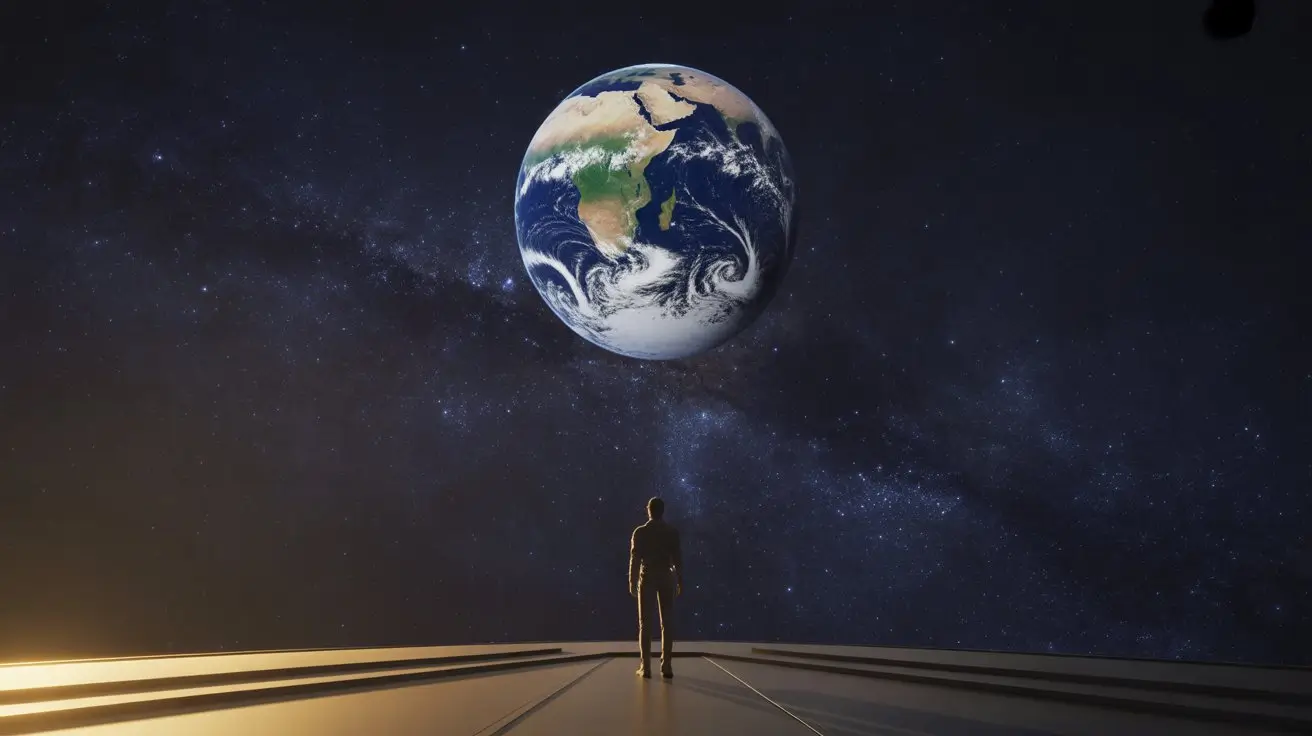
Farewell to Life on Earth: Reflecting on Humanity, Legacy, and the Future
The idea of a farewell to life on Earth is both deeply emotional and intellectually fascinating. It brings forward questions about humanity’s purpose, the fragility of our planet, and the legacy we leave behind. Whether imagined as a philosophical reflection, a scientific possibility, or a symbolic farewell marking a major transition for humanity, the concept encourages people to think beyond everyday life and consider the broader story of civilization.
Throughout history, humans have wondered what would happen if life on Earth came to an end or if humanity had to leave the planet behind. This curiosity is not rooted purely in fear but also in reflection. Thinking about such a farewell often pushes us to appreciate our planet more deeply and examine how our choices shape the future of life itself.
In this article, we will explore the meaning behind the phrase “farewell to life on Earth,” the philosophical reflections it inspires, possible scenarios that could lead to such a moment, and what humanity’s legacy might look like if this chapter of existence were to close.
Understanding the Meaning of a Farewell to Life on Earth
When people hear the phrase farewell to life on Earth, they may imagine different things. Some picture a dramatic scientific event that forces humanity to leave the planet. Others see it as a symbolic farewell, representing the end of one stage of civilization and the beginning of another.
At its core, the concept represents a moment of reflection. A farewell is rarely just about departure; it is about gratitude, memories, and recognition of what has been experienced.
Earth is more than a physical place. It is the cradle of humanity, the environment that shaped cultures, languages, art, science, and countless human experiences. Every forest, ocean, city, and mountain carries the story of life evolving over billions of years.
Thinking about saying goodbye to such a place reminds us how extraordinary life here truly is. The diversity of ecosystems, the complexity of human societies, and the creativity of individuals all form part of Earth’s living narrative.
Humanity’s Deep Connection to the Planet
Humans are not separate from Earth; they are a product of it. Every resource we rely on, from food and water to air and energy, originates from the planet’s natural systems.
For thousands of years, civilizations grew around rivers, fertile lands, and stable climates. Entire cultures formed their identities based on the landscapes they inhabited. Mountains became sacred symbols, oceans inspired exploration, and forests provided shelter and mystery.
Because of this deep connection, imagining a farewell to life on Earth carries emotional weight. It is similar to leaving behind a childhood home—except on a planetary scale.
Such reflections highlight an important truth: Earth is not just a habitat but a shared heritage. The planet connects generations of people who lived centuries apart and those who will exist in the future.
Philosophical Reflections on Leaving Earth
The concept of leaving Earth often triggers philosophical questions about identity and belonging. If humanity were to depart from the planet, would people still feel connected to it?
For many thinkers, Earth represents more than geography. It symbolizes origin. Just as individuals carry memories of their birthplace, humanity collectively carries the story of Earth within its culture and history.
A farewell would therefore not erase that connection. Instead, it would transform it into a legacy. Future generations, even if living far beyond Earth, would likely continue to tell stories about the planet where humanity began.
Philosophically, this idea reminds us that places shape identities. Earth’s landscapes, climates, and ecosystems influenced how humans evolved physically and culturally.
Leaving it behind would not erase its influence—it would simply extend the human story into a new chapter.
Possible Scenarios Behind the Idea
While the phrase often appears in philosophical discussions, there are also scientific and speculative scenarios that inspire the concept of a farewell to life on Earth.
One scenario involves long-term planetary change. Over extremely long periods, natural cosmic processes could alter the conditions that allow life to thrive here. In such a distant future, humanity might seek new environments to ensure survival.
Another possibility involves technological advancement. If humanity develops the ability to travel and live in distant locations beyond Earth, people might eventually expand civilization beyond a single planet.
In such situations, “farewell” may not mean abandonment. Instead, Earth might remain a historical home—visited, preserved, and remembered as the birthplace of human civilization.
These scenarios highlight the adaptability of humanity. Our species has survived ice ages, migrations, and massive societal changes. Imagining life beyond Earth continues that pattern of adaptation and exploration.
Emotional Impact of Saying Goodbye
A farewell to life on Earth would not only be a scientific or logistical event. It would also carry profound emotional meaning.
Earth is filled with memories: childhood experiences, cultural traditions, historic landmarks, and natural wonders. Generations have grown, struggled, and celebrated here.
Saying goodbye would involve acknowledging these shared experiences.
Many people might feel grief at the idea of leaving behind familiar landscapes. Others might feel hope, viewing the departure as an opportunity for humanity to continue growing and exploring.
This combination of sadness and optimism is common in major transitions. Just as individuals leave one phase of life to begin another, humanity might one day face a moment where it must move forward while honoring the past.
Preserving Earth’s Legacy
If humanity were ever to say farewell to life on Earth, preserving the planet’s legacy would likely become a priority.
The planet’s ecosystems, biodiversity, and cultural achievements represent millions of years of development and creativity.
Future generations would likely seek ways to protect this heritage.
Possible efforts might include:
- Preserving digital records of human history and culture
- Protecting ecosystems and wildlife as natural heritage
- Documenting languages, art, and scientific knowledge
- Maintaining Earth as a protected planetary reserve
Even if humanity expanded beyond Earth, the planet would remain a symbol of origin and identity.
In many ways, preserving Earth’s legacy would be similar to protecting historic sites today. It would represent respect for the journey that brought humanity to where it is.
Lessons the Concept Teaches Us Today
Even though a farewell to life on Earth remains largely hypothetical, the concept carries important lessons for the present.
Thinking about leaving the planet encourages people to recognize how precious it truly is.
Earth is currently the only known world capable of supporting such diverse and complex life. Its delicate balance of atmosphere, climate, and ecosystems makes it uniquely suited for living organisms.
Reflecting on this reality can inspire a deeper sense of responsibility. Protecting natural resources, preserving biodiversity, and maintaining environmental balance become essential tasks.
Rather than viewing Earth as expendable, the idea of a farewell reminds us that the planet is irreplaceable.
It encourages individuals, communities, and governments to act with long-term thinking rather than short-term convenience.
Humanity’s Future Beyond Earth
If humanity ever expands beyond Earth, the transition would likely unfold gradually rather than suddenly.
Civilization would carry its knowledge, creativity, and cultural traditions with it. Music, literature, science, and philosophy would continue evolving, influenced by new environments and experiences.
Yet Earth would remain central to the human story.
Future generations might look back on Earth the same way people today study ancient civilizations—with curiosity, respect, and fascination.
The difference is that Earth would not be just a historical site. It would be the birthplace of an entire species.
Its oceans, continents, and atmosphere would represent the beginning of a journey that extended far beyond the planet itself.
A Symbolic Farewell Rather Than an Ending
In many ways, a farewell to life on Earth may not represent an ending at all. Instead, it could symbolize transformation.
Human history is filled with moments where endings became beginnings.
The transition from nomadic societies to agricultural communities changed civilization. The development of science and technology reshaped human understanding of the universe.
Similarly, leaving Earth—if it ever happens—might simply mark another step in humanity’s evolution.
Rather than erasing the importance of Earth, such a step would emphasize it even more. The planet would forever remain the foundation upon which the human story was built.
Why the Idea Resonates So Strongly
The concept resonates because it touches on universal human emotions: nostalgia, curiosity, and hope.
People naturally wonder about the future of civilization and the long-term destiny of humanity.
Imagining a farewell to life on Earth forces individuals to step outside everyday concerns and think on a planetary timescale.
It reminds us that our lives are part of a much larger narrative—a story stretching across generations and possibly even across worlds.
At the same time, it encourages gratitude for the present moment.
Every sunrise, forest, ocean wave, and city skyline represents the richness of life on Earth.
Reflecting on the possibility of farewell can make those everyday experiences feel even more meaningful.
Frequently Asked Questions (FAQ)
What does “farewell to life on Earth” mean?
The phrase typically refers to the idea of humanity leaving Earth or imagining a future where life on the planet ends. It can be used in philosophical discussions, scientific speculation, or symbolic reflections about humanity’s future.
Is humanity likely to leave Earth someday?
While it is impossible to predict the distant future with certainty, many scientists and thinkers consider the possibility that humans may eventually expand beyond Earth as technology advances and exploration continues.
Would leaving Earth mean abandoning the planet?
Not necessarily. In many scenarios, Earth would remain an important historical and cultural home. Humanity might preserve it as a protected environment or maintain connections with it even if civilization expanded elsewhere.
Why do people think about this concept?
People explore the idea because it raises important questions about humanity’s future, environmental responsibility, and our relationship with the planet. It encourages deeper reflection about our role in the universe.
What lessons can we learn from this idea today?
The concept highlights how valuable Earth is. By imagining a future farewell, people often realize the importance of protecting the planet’s ecosystems, resources, and biodiversity in the present.
Final Thoughts
The idea of a farewell to life on Earth is not merely about departure. It is about reflection, gratitude, and awareness of humanity’s place in the universe.
Earth is more than a location—it is the birthplace of human civilization, the environment that nurtured creativity, curiosity, and exploration.
Whether humanity remains on Earth forever or eventually expands beyond it, the planet will always hold a special place in the human story.
Thinking about a farewell reminds us of something important: the value of what we have today.
Every moment spent on this remarkable planet is part of a larger journey—one that began on Earth and may one day reach far beyond it.
For More Visits: PrimeUsaMag
Also Read: Rogeroconnellagency Proven Success Blueprint 2026













Leave a comment