




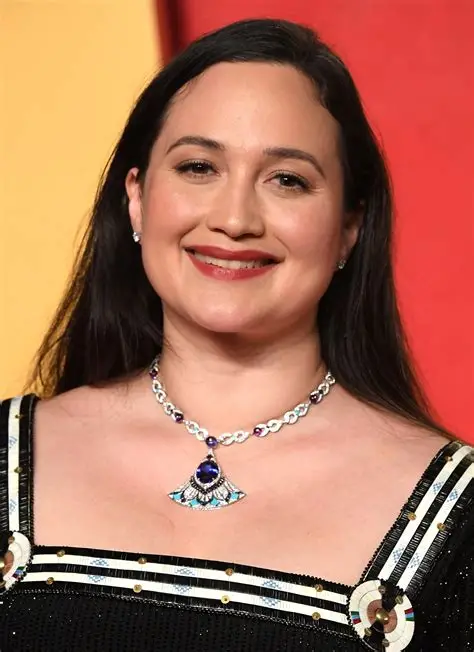
Lily Gladstone: The Trailblazing Actress Who Redefined Hollywood’s Idea of a Star
Introduction
There are moments in cinema history when a performance arrives so quietly, so fully formed, and so deeply rooted in truth that audiences are left wondering how they ever lived without knowing that actor’s name. Lily Gladstone created one of those moments. Long before awards season came calling, she was working steadily in independent film and television, earning the admiration of directors and co-stars who recognized something extraordinary in her stillness, her precision, and her refusal to perform emotion rather than simply live inside it.
Today, Lily Gladstone stands as one of the most talked-about and celebrated actors of her generation — not because Hollywood manufactured her rise, but because she earned it with work so honest it could not be ignored. Her journey from the Blackfeet Nation reservation in Montana to the red carpets of the world’s most prestigious film festivals is not just a success story. It is a statement about whose stories deserve to be told, and who is capable of telling them.
Early Life and Cultural Roots
Lily Gladstone was born in 1986 and grew up on the Blackfeet Nation reservation near Browning, Montana. She is of Blackfeet and Nez Perce heritage on her father’s side and has German and Scottish roots on her mother’s. From the beginning, her life was shaped by two worlds — the richness of Indigenous culture and tradition, and the broader landscape of American identity — and this duality would later infuse her performances with a complexity that is difficult to manufacture.
She studied at the University of Montana, where she pursued a degree in drama and became involved in theatrical performance. Her training was rooted in classical technique but tempered by a personal philosophy that placed authenticity above technical showmanship. Those who worked with her in those early years noted that she never tried to be impressive — she tried to be real. The distinction, subtle on the surface, matters enormously when a camera is inches from your face.
After graduating, she returned to Montana and worked with Indigenous theater companies and educational programs before making her way toward film. This path was not the typical route of an ambitious young actor chasing fame in Los Angeles. It reflected her values. She wanted her work to be connected to community, to meaning, and to something larger than individual ambition.
The Film That Changed Everything: Certain Women
Many dedicated cinephiles first encountered Lily Gladstone in Kelly Reichardt’s 2016 film Certain Women, and the experience was one that tended to stay with people. In the film, she plays a ranch hand — a character given no name in the credits, referred to only as “The Rancher” — who develops a profound, aching attachment to a night-school law instructor played by Kristen Stewart.
The performance is constructed almost entirely in silence and restraint. There are no speeches, no breakdowns, no conventional dramatic moments. Instead, Gladstone communicates an entire interior landscape through the way her character watches, the way she lingers over simple interactions, and the devastating quiet of someone who has learned to want very little and is still left with nothing. Critics were stunned. Awards bodies took notice. The performance announced her as someone to watch — an actor who understood that the most powerful thing the camera can record is not movement, but stillness.
Certain Women did not make Lily Gladstone a household name overnight, but it established her reputation among those who take cinema seriously. Directors and casting agents began circulating her name. She was, as it is said in the industry, an actor’s actor — someone whom creative professionals admired even before the general public caught up.
Killers of the Flower Moon: A Performance for the Ages
The project that brought Lily Gladstone to the global stage arrived in the form of Martin Scorsese’s Killers of the Flower Moon, released in 2023. The film, based on David Grann’s nonfiction book, tells the story of the Reign of Terror perpetrated against the Osage Nation in early 20th-century Oklahoma — a systematic campaign of murder and fraud targeting the Osage people after oil was discovered on their land. It is one of the darkest and most important chapters in American history, and for decades it went largely untaught in schools and unexamined in popular culture.
In the film, Gladstone plays Mollie Kyle, an Osage woman who marries Ernest Burkhart, a white man played by Leonardo DiCaprio. What unfolds is a tragedy in the truest sense — a woman who loves her husband while being systematically betrayed by him, who watches her family disappear one by one, and who slowly pieces together a truth so monstrous that it challenges her ability to comprehend the world she thought she knew.
Gladstone’s work in this role is the kind that resists easy description. She does not play victimhood. She does not play naivety. She plays a woman of intelligence, dignity, and deep love — a person whose full humanity is always present, even as the world around her attempts to reduce her to a resource to be exploited. There is a particular scene in which Mollie sits across from her husband as the truth begins to crystallize, and in Gladstone’s face you can witness an entire civilizational grief — not just the grief of a wife, but the grief of a people who have survived every attempt at erasure and must survive this one too.
The response from critics and audiences was immediate and overwhelming. Her name became one of the defining presences of the 2023 awards season, and the conversation around her work extended well beyond the usual metrics of performance quality. Writers, scholars, and Indigenous community members spoke about what it meant to see an Osage woman’s story told with this kind of care and complexity, and about what it meant to have a Native American actress at the absolute center of a major Hollywood production.
Historic Recognition and What It Means
When the Golden Globe Awards ceremony arrived in January 2024, Lily Gladstone made history by becoming the first Native American actress to win a Golden Globe for Best Actress in a Motion Picture Drama. The moment was received with genuine emotion not only in Hollywood but across Indigenous communities throughout North America. In her acceptance speech, she spoke in the Blackfeet language before delivering the rest of her remarks in English — a gesture that was both deeply personal and profoundly political.
Her subsequent Oscar nomination for Best Actress also made history, marking the first time a Native American actress had been nominated for the Academy Award in that category. The significance of this cannot be overstated. Hollywood has a long and painful history of casting non-Native actors in Indigenous roles, reducing Native characters to stereotypes, and excluding Native storytellers from positions of creative authority. Gladstone’s visibility at the highest levels of the industry represents a genuine rupture with that history.
She has spoken openly about the responsibility she feels in occupying this space — not as a burden, but as an opportunity to hold doors open for other Indigenous artists. She has been vocal about the need for more authentic representation both in front of and behind the camera, and about the importance of stories like Killers of the Flower Moon being told with care and accuracy.
An Actor of Unusual Depth
What sets Lily Gladstone apart from many of her contemporaries is not the accumulation of accolades but the underlying philosophy that governs her approach to her craft. She has spoken in interviews about her deep interest in the internal architecture of a character — not just who a person is on the surface, but what experiences, wounds, joys, and relationships have shaped the way they move through the world.
She is known among directors for her preparation, her willingness to engage with research not as a box to check but as a genuine means of understanding. For Killers of the Flower Moon, she worked closely with the Osage Nation, meeting with community members and learning the cultural context that would allow her to represent Mollie Kyle with accuracy and respect. This is the kind of diligence that does not always show up on screen in visible ways — but it shows up in the quality of trust that audiences place in a performance.
She is also, by multiple accounts, an extraordinarily generous scene partner. Leonardo DiCaprio, who worked alongside her for the duration of Killers of the Flower Moon, has spoken about the experience of performing opposite her as one of the most demanding and rewarding of his career. When an actor of DiCaprio’s experience identifies a co-star as an equal or as an inspiration, it says something significant.
Beyond the Screen: Advocacy and Presence
Lily Gladstone’s impact extends beyond the films she appears in. She has become a visible and thoughtful voice on issues related to Indigenous representation, land rights, and the particular challenges facing Native communities in America. She uses her platform deliberately, without the frantic energy of someone performing activism for optics, but with the consistency of someone who came to these commitments long before the cameras were pointed at her.
She is also involved in supporting Indigenous filmmakers and storytellers, recognizing that lasting change in Hollywood requires not just individual success stories but structural shifts in who gets to greenlight projects, who gets to write them, and who gets to direct them. Her own trajectory — from reservation theater to the Oscars stage — is meaningful, but she understands that it becomes far more meaningful when it is part of a larger movement.
Frequently Asked Questions About Lily Gladstone
What is Lily Gladstone’s heritage? Lily Gladstone is of Blackfeet and Nez Perce heritage on her father’s side and has German and Scottish ancestry on her mother’s side. She grew up on the Blackfeet Nation reservation in Browning, Montana.
What was Lily Gladstone’s breakthrough role? While she gained significant critical attention for her work in Kelly Reichardt’s Certain Women (2016), her true breakthrough on a global scale came with her portrayal of Mollie Kyle in Martin Scorsese’s Killers of the Flower Moon (2023).
Did Lily Gladstone win an Oscar? Lily Gladstone received an Academy Award nomination for Best Actress for Killers of the Flower Moon, making her the first Native American actress to be nominated in that category. She won a Golden Globe for Best Actress in a Motion Picture Drama, making history as the first Native American to do so.
What language did Lily Gladstone speak at the Golden Globes? During her acceptance speech at the 2024 Golden Globe Awards, Lily Gladstone spoke in the Blackfeet language — the language of her father’s heritage — before continuing her remarks in English.
What other films has Lily Gladstone appeared in? In addition to Certain Women and Killers of the Flower Moon, Gladstone has appeared in films including First Cow (2019), Fancy Dance (2023), and the limited series Reservation Dogs, among other projects.
How does Lily Gladstone approach her roles? Gladstone is known for her intensive research process and her focus on internal authenticity. For her role in Killers of the Flower Moon, she worked directly with the Osage Nation community to ensure her portrayal of Mollie Kyle was culturally accurate and respectful.
Is Lily Gladstone involved in Indigenous advocacy? Yes, Gladstone is a vocal advocate for Indigenous representation in Hollywood and beyond. She has spoken publicly about the need for Native storytellers to have creative authority over stories about their communities, and she supports Indigenous filmmakers and artists.
Conclusion
Lily Gladstone did not arrive in Hollywood; Hollywood arrived at her door after years of her quietly doing work that was too good to ignore. Her story is a reminder that authenticity has a kind of gravity — it draws people toward it eventually, regardless of how long it takes. She brings to every role a fullness of being that most actors spend entire careers searching for and never quite reaching.
What she has accomplished in the past several years is historic by any measure. But if you ask those who know her work best — the directors, the scholars of Indigenous cinema, the audiences who sat in darkened theaters and felt something shift inside them — they will tell you that the most exciting thing about Lily Gladstone is not what she has already done. It is what she is still becoming.
For More Visits: PrimeUsaMag
Also Read: Mybettingedge Proven Winning Strategies Guide 2026












Leave a comment